Professional
Creative
Standard
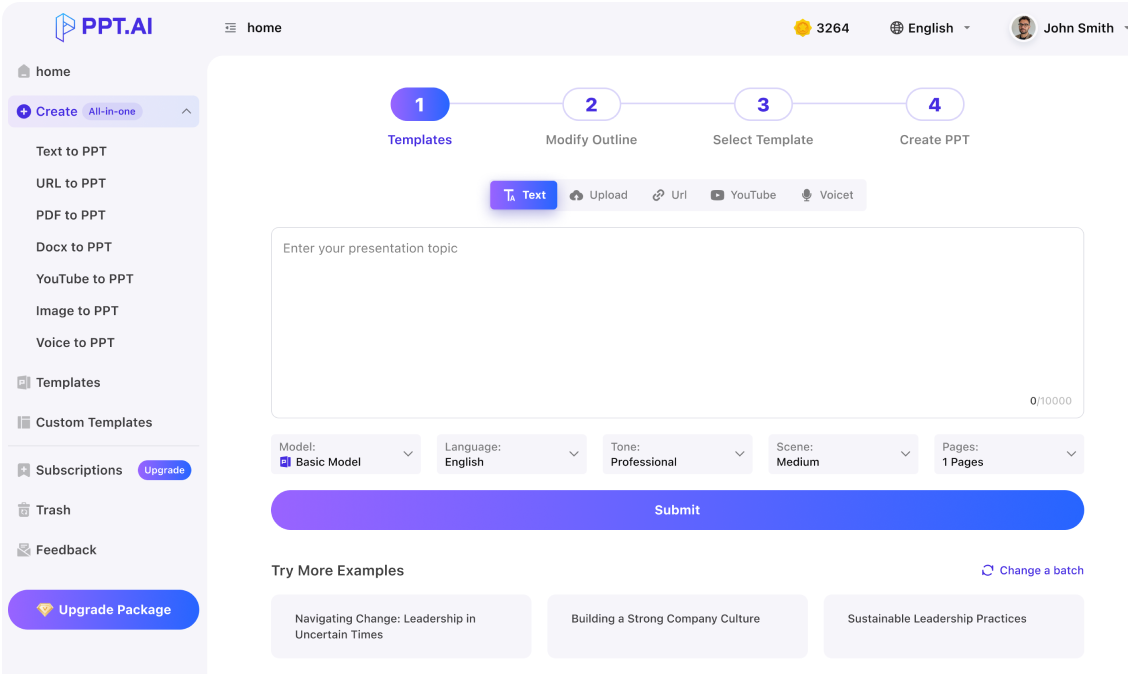
Text
Upload
Url
YouTube
Image
Submit
Drag and drop a file to create a PPT
Supports DOC, DOCX, PDF, PPT, PPTX, TXT, MD, XLS, XLSX, CSV, HTML, EPUB, MOBI, XMIND, and MM files under 10MB
Choose a File
Submit
Submit
Drag and drop a file to create a PPT
Supports PNG, JPG, JPEG, and BMP files under 5MB
Choose a IMAGE

Turn ai簡報 notes into an actionable brief

Use ai簡報 to explain the present situation, the change you propose and the information people need before agreeing to it. Working notes often mix observations and possible actions. Give each its proper role so the draft does not turn an unresolved suggestion into a commitment.
Start ai簡報

Arrange ai簡報 around the reader’s questions

In ai簡報, explain the problem before the response and put the basis of an estimate near the conclusion it supports. Follow the questions a reader will ask about cause, consequences and practical next steps. The order should make the proposed action easier to assess.
Start ai簡報

Review ai簡報 for real follow-through

Complete ai簡報 with clear Traditional Chinese and the responsibilities and dates that are actually known. Distinguish what has been agreed from what still needs confirmation. A useful ending tells people what happens next without promising that an uncertain plan is already settled.
Start ai簡報

ai簡報: Make follow-through explicit

Sort the status, answer reader questions, confirm the action.
Step 1
Step 2
Step 3

Sort the notes by status

Before ai簡報, separate the current situation, proposed action and open question. Identify confirmed facts and decisions so the initial draft does not describe all working notes as approved plans.

Answer the reader’s next question

During ai簡報, check the path from problem to response. Add the reasoning behind a figure or estimate where the reader needs it, rather than leaving the basis in unrelated background notes.

State the next action and its limits

After ai簡報, confirm known ownership, timing and dependencies. Make unconfirmed arrangements explicit and share the reviewed version so recipients know which actions they can rely on.

Start ai簡報

ai簡報: Briefs that connect plans with actual responsibilities

Say what is agreed and what remains open.
An execution update
Use ai簡報 to separate completed work, next tasks and unresolved dependencies within an agreed action.
A responsibility discussion
Prepare ai簡報 with a proposed owner clearly labeled until the assignment receives confirmation.
A timeline with dependencies
Use ai簡報 to explain step dependencies, distinguishing known dates from estimates that are not commitments.
A problem-to-response briefing
Build ai簡報 around the obstacle and proposed response, explaining why the action fits the problem.
A forecast needing review
Use ai簡報 to show forecast assumptions and the information that would require revising the estimate.
A Traditional Chinese follow-up note
Prepare ai簡報 as a Traditional Chinese follow-up with a recognizable version and an explicit practical next step.

ai簡報: Questions about actions, owners and dependencies

Turn working notes into a reliable shared version.

What does ai簡報 help organize here?

ai簡報 organizes execution status, owners and dependencies, keeping confirmed commitments separate from dates that may change.

How should I label the ai簡報 source notes?

Label ai簡報 notes as completed, ongoing or blocked, using a common reporting date and an identifiable responsible person.

Why arrange content by the reader’s questions?

Order ai簡報 around what readers need to check or resolve, rather than the sequence in which your notes were collected.

Which guides address related decision work?

Connect ai簡報 with proposal preparation or business-decision documents according to the next review the team needs. Read presentaciones or best ai for presentations.

How does ai簡報 state a proposed owner?

Write the role as proposed until the assignment is confirmed. In ai簡報, clear wording prevents a reader from mistaking a draft suggestion for an accepted responsibility.

What should ai簡報 say about uncertain dates?

Label estimates and state known dependencies. For ai簡報, a useful timeline can acknowledge uncertainty without pretending that every step already has an agreed delivery date.

How do I explain the basis of an estimate?

Keep the relevant assumptions or source beside the ai簡報 estimate. Explain its scope and what would change it, so the recipient can assess more than the number alone.

What makes Traditional Chinese wording actionable?

Use ai簡報 wording that identifies the task and status plainly. Avoid broad slogans when the reader needs to know who decides, what happens next or which point still requires confirmation.

What if the next step depends on another team?

State the dependency and what must happen before work can proceed. Distinguish your proposed sequence from the part the other team has actually agreed to perform.

What should the final shared copy make clear?

Confirm its version, agreed decisions and open items. The recipient should be able to separate instructions they can act on from questions that still need a discussion or approval.

Discover More PPT AI Products

Unlock even more with PPT AI suite of intelligent solutions

PPT AI Blog

Explore premium articles to learn how to maximize your use of PPT AI for better presentations.
Try PPT.AI Today
Start here, better presentations instantly.
Start for free
Help us understand?
What was the reason you didn't complete your payment?
Continue payment
Submit feedback