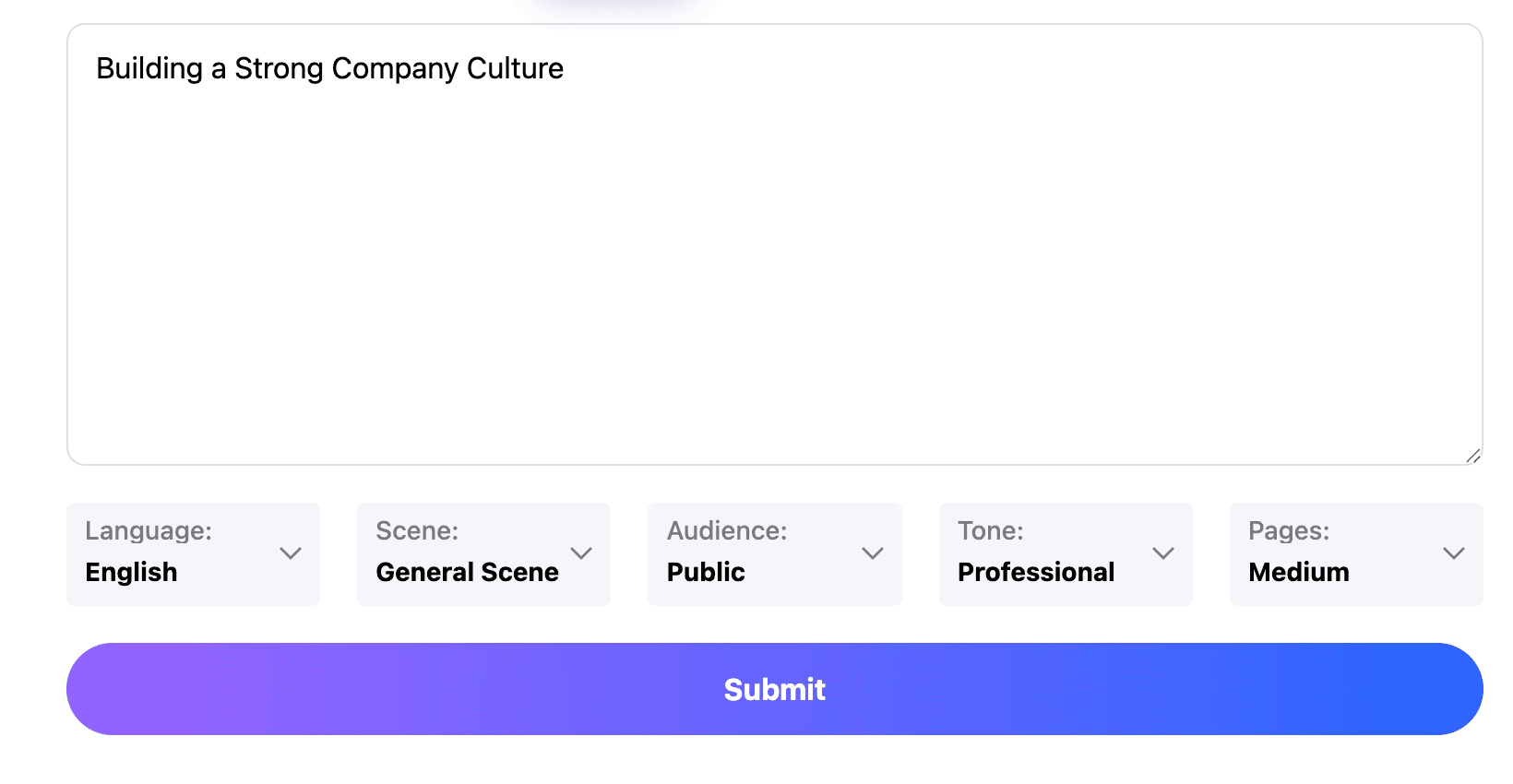
Professional
Creative
Standard
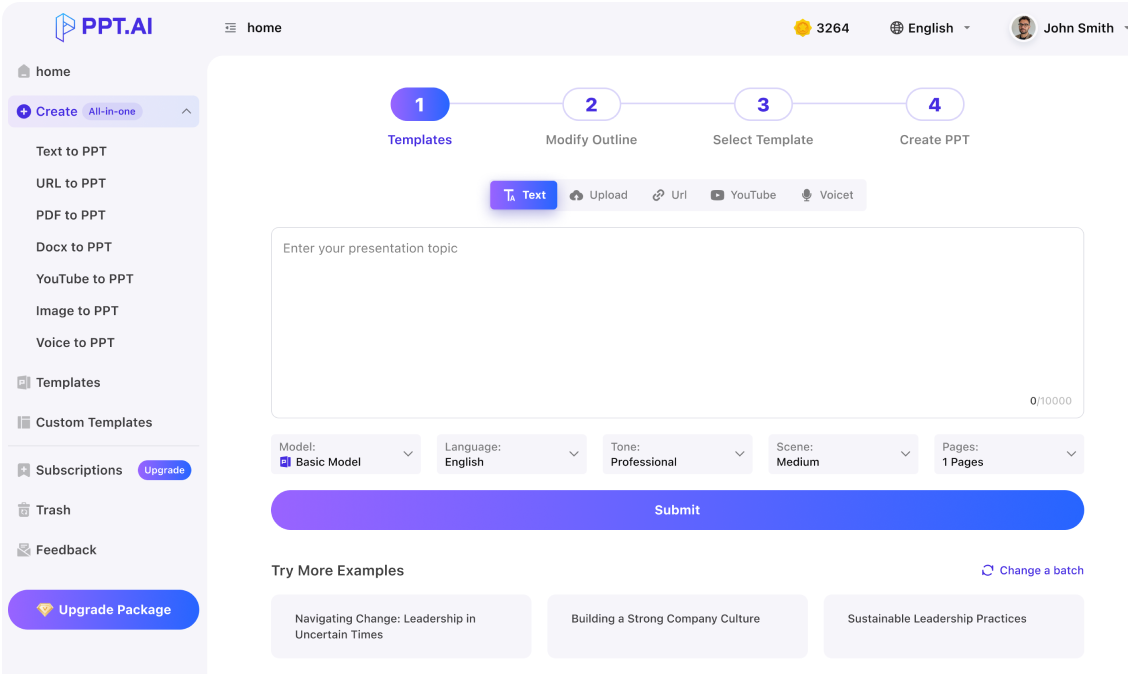
Text
Upload
Url
YouTube
Image
Submit
Drag and drop a file to create a PPT
Supports DOC, DOCX, PDF, PPT, PPTX, TXT, MD, XLS, XLSX, CSV, HTML, EPUB, MOBI, XMIND, and MM files under 10MB
Choose a File
Submit
Submit
Drag and drop a file to create a PPT
Supports PNG, JPG, JPEG, and BMP files under 5MB
Choose a IMAGE

controversial topics: Narrow the question before taking a position

For controversial topics, start with a question that can be discussed within the available time. Define the population, policy or situation under consideration. Broad labels often hide several separate disagreements. Frame controversial topics so the audience can identify the specific decision or claim at issue and understand why reasonable people may weigh its consequences differently.
Plan your discussion

controversial topics: Separate evidence from interpretation

Build controversial topics around traceable claims and clearly stated values. Show what a source establishes, where uncertainty remains and which conclusion is your interpretation. Avoid presenting unequal evidence as equally strong merely to create symmetry. A useful controversial topics presentation explains both the quality of evidence and the reasoning that connects it to a position.
Plan your discussion

controversial topics: Design the discussion as carefully as the slides

When presenting controversial topics, set expectations for listening, questions and respectful disagreement. Use examples that explain the issue without humiliating individuals or exposing private information. End with a focused question or a summary of the unresolved tradeoffs. Thoughtful controversial topics slides help people evaluate an argument rather than simply react to a provocative headline.
Plan your discussion

controversial topics: Workflow

Develop controversial topics into a presentation by narrowing the question, identifying evidence and arranging a discussion that people can follow.
Step 1
Step 2
Step 3

Define the scope

Brief controversial topics with a precise question, audience and time limit. Identify key terms and the kinds of evidence needed, then note sensitive examples that should be handled with care.

Organize the arguments

Use the controversial topics outline to distinguish factual claims, values and proposals. Present meaningful counterarguments and explain what evidence would strengthen or weaken your own conclusion.

Check and facilitate

Review controversial topics for accurate quotations, current sources and loaded wording. Rehearse how you will invite questions and respond when the discussion moves beyond the scope of the presentation.

Plan your discussion

controversial topics: Applications

Use controversial topics to practice careful reasoning in settings where different values, experiences and interpretations deserve clear explanation.
Classroom debates
Use controversial topics to practice argument evaluation. Give students a defined question, access to relevant sources and a way to distinguish criticism of an idea from criticism of a classmate.
Policy briefings
Present controversial topics with the affected groups, available options and likely tradeoffs. Identify uncertainty in projected outcomes and explain which assumptions would change the recommendation.
Media literacy lessons
Explore controversial topics by comparing how different sources frame the same claim. Examine evidence, omitted context and headline language without treating popularity or repetition as proof.
Ethics seminars
Use controversial topics to distinguish competing principles and their consequences. A concrete scenario can reveal why people disagree even when they accept the same underlying facts.
Community conversations
Frame controversial topics around an issue participants can influence. Explain the process for decisions, acknowledge different experiences and provide a clear route for questions that need follow-up evidence.
Research presentations
Discuss controversial topics by showing the question, method and limits of the findings. Explain where researchers agree and where disagreement reflects missing evidence, different measurements or alternative interpretations.

controversial topics: Questions

Answers about choosing a question, representing disagreement fairly and checking evidence before presenting a sensitive subject.

How do I choose controversial topics?

Choose controversial topics that matter to the audience and can be examined with credible evidence. Narrow a broad subject to a specific question. Consider the setting, participants' age and the time available for context and discussion.

Do controversial topics need equal time for every claim?

Represent relevant positions accurately while assessing their evidence honestly. Equal screen space does not make claims equally supported.

How can controversial topics avoid loaded language?

When writing slides, identify words that assume the conclusion or assign motives without evidence. Replace them with a precise description of the action, claim or consequence. Attribute opinions clearly and quote sources in context.

Which presentation guides are relevant?

After defining controversial topics, look for guidance on organizing a general presentation or developing evidence-led slides. diapositivas con ia aippt

What makes a source credible?

For controversial topics, examine the source's expertise, evidence, publication context and possible conflicts. Prefer original research or primary documents when practical. Check whether later information changes the claim and distinguish reporting from commentary.

Can I express my own position?

You can present a position on controversial topics while making its assumptions and evidence explicit. Acknowledge meaningful objections and explain the tradeoffs you accept.

How should I use statistics?

Use statistics in controversial topics with definitions, dates and denominators. Explain whether figures describe correlation, causation or an estimate.

What if discussion becomes personal?

For controversial topics, establish discussion expectations before disagreement intensifies. Do not invite disclosure of private experiences as a condition of participation.

Should I use shocking images?

Select controversial topics visuals for explanatory value and suitability to the audience. Avoid unnecessary graphic content or images that distort the issue. Provide context and follow the venue's requirements when material may be distressing.

What is a constructive ending?

End controversial topics with the strongest supported conclusion, the remaining uncertainty and a focused question or next step.

Discover More PPT AI Products

Unlock even more with PPT AI suite of intelligent solutions

PPT AI Blog

Explore premium articles to learn how to maximize your use of PPT AI for better presentations.
Try PPT.AI Today
Start here, better presentations instantly.
Start for free
Help us understand?
What was the reason you didn't complete your payment?
Continue payment
Submit feedback